"The questions you are asking are meaningful ones," the elder responded. "They are deep, difficult, and distressing, but important. Let me attempt to answer by drawing a sketch for you."
The elder drew the following sketch:
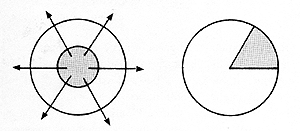
"The two sketches picture the seat of doctrine in two different church members," the elder explained. "Person No.1 has internalized the truths of Scripture. God's Word has been graciously implanted by the Holy Spirit in his heart. Therefore, God's truths (doctrines) will influence his motives, thoughts, words, and actions. Person No.2 knows doctrine mentally, but his religion is limited to one compartment in his life - a religious part. He likes to hear and read sound doctrine; he is quick to condemn the least straying from it. However, it is only a Sunday matter, a church thing, a religious component with him. The remainder of his life is not touched."
"I see," Mrs. Clark replied slowly. "This explains why everything 'religious' in their lives must be very strict, but everything else can be taken lightly. Only certain things are religious matters to them."
"Precisely," the elder responded, "Not all of life is religious to them. Their business life is strictly business, and their home life is a home matter. They do not understand that all their motives, thoughts, words, and actions are religious; that all of life is witnessed by God."
When each person hears or recites the "I believe..." of the creeds, how is he to believe these truths, totally or partially? Is scriptural doctrine meant for a "religious" component in one's life or for all of life? Why?

|
Is doctrine to be viewed as a dry, intellectual item, or a living reality? Why? |
|
|
How do the following verses warn against a "speaking," but not a "living" confession? What doth it profit, my brethren, though a man say he hath faith, and have not works? can faith save him? - James 2:14-17 |

