
|
How is a similar lesson pictured in the first Passover in Egypt? How does the blood of the lamb portray Christ's work as mediator for His people? |
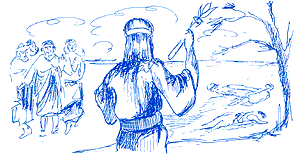
- After the death of Korah, Dathan, and Abiram, the people of Israel continued to rebel, saying to Moses and Aaron, "Ye have killed the people of the LORD" (Numbers 16:41b).
- Upon witnessing this, we read: "And Moses said unto Aaron, Take a censer, and put fire therein from off the altar, and put on incense, and go quickly unto the congregation, and make an atonement for them: for there is wrath gone out from the LORD; the plague is begun. And Aaron took as Moses commanded, and ran into the midst of the congregation; and behold, the plague was begun among the people: and he put on incense, and made an atonement for the people. And he stood between the dead and the living; and the plague was stayed. Now they that died in the plague were fourteen thousand and seven hundred, beside them that died about the matter of Korah" (Numbers 16:46-49).
- How was Aaron a type of Christ, as mediator, when he stood between the dead and the living? Why are we only safe, when standing behind Jesus Christ and His sacrifice?
- How do the following aspects of this story all point to Christ's work as mediator:
- - The high priest
- - Fire from the brazen altar - The incense
- - Making atonement

